

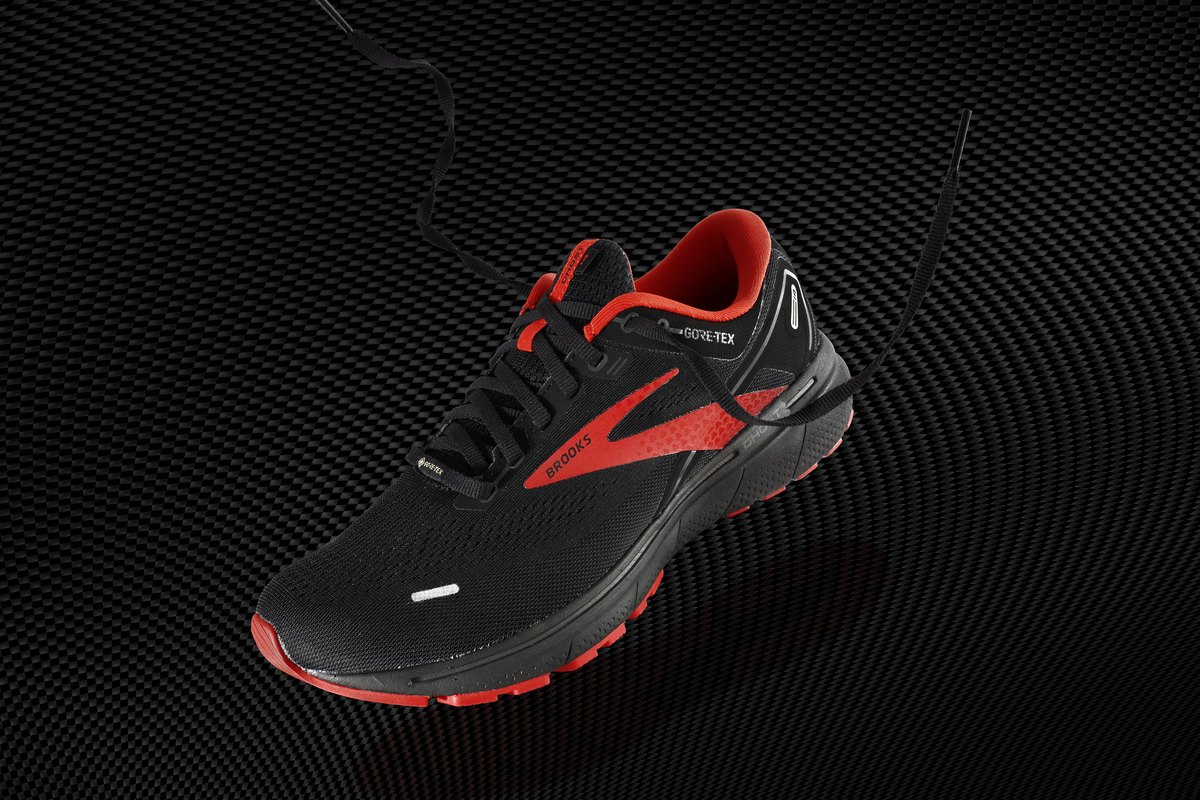
Brooks has been making shoes since 1914 and running shoes since the 1970s, and for most of that time it was nobody’s first choice. The company that exists today was made in one decision, in 2001, to throw away half of what it sold. It is also, since 2006, the only running brand owned by Warren Buffett.
1914: bathing shoes in Philadelphia
The Brooks story begins with John Brooks Goldenberg buying the Quaker Shoe Company in Philadelphia in 1914. Quaker made bathing shoes and ballet slippers, and for its first several decades Brooks made whatever there was a market for: football boots, baseball spikes, roller-skate boots. It was a factory with a name, not a brand with an idea.
Running arrived in the 1970s, when the American jogging boom turned a niche into a market. The Villanova, released in 1974 and named after the university’s cross-country programme, was the first shoe Brooks built specifically for running. The Chariot followed in 1982 – a stability shoe whose descendants, under the Adrenaline name, are still in the range forty years on. Brooks had found the thing it was good at. It then spent twenty years not concentrating on it.
Bankruptcy, and a bankruptcy auction
The 1980s were unkind. Brooks went through bankruptcy and was bought at auction in 1981 by Wolverine World Wide – the Michigan company that today owns Saucony – and passed through a succession of owners afterwards. By the end of the 1990s it was a mid-sized maker of running shoes, walking shoes, tennis shoes, basketball shoes and casual shoes, sold wherever anyone would stock them, and losing ground in every category at once.
2001: half the range, and only running
Jim Weber became chief executive in 2001, with the company close to failing for a second time. His decision was the one that made modern Brooks: cut the product line by more than half and make running shoes only – and sell them, as far as possible, through specialist running shops rather than discount chains. Every other category went. So did a large share of the revenue, deliberately.
It worked because it matched what the company had actually been good at since the Villanova. Serious runners bought Brooks; casual buyers had never much cared. Concentrating on the first group, and pricing for them, turned a struggling generalist into a specialist with a loyal following. By the 2010s Brooks was the best-selling brand in American specialist running shops, a position it has held since.
2006: Berkshire Hathaway, by accident
Brooks did not set out to be owned by Warren Buffett. In 2006 its then parent, Russell Corporation, was bought by Fruit of the Loom, which belongs to Berkshire Hathaway; Brooks came with the deal. In 2012 Berkshire made it a stand-alone business, with Weber reporting directly to Buffett, and it has run as one since – from Seattle, where the company has been based since 2001. Berkshire does not interfere and does not sell; for a company that had spent a century changing hands, that stability was worth more than capital.
The shoes reflect the strategy. Brooks does not race the market to the newest foam or the lowest weight; it makes the Ghost, the Adrenaline and the Glycerin a little better each year and expects people to buy them for a decade. The DNA Loft foam and the GuideRails stability system are the current expressions of that – neither is dramatic, both are meant to be reliable. In an industry built on the new, Brooks is the brand that decided, in 2001, to be good at one old thing. It has been rewarded for it every year since.
Questions I get asked about Brooks
Why does Brooks make nothing but running shoes?
Because in 2001 it decided to. Jim Weber cut more than half the range – tennis, basketball, casual, walking – and kept running, knowing the revenue would go with it. The company had been good at running shoes since the Villanova in 1974 and bad at being a generalist. The decision simply admitted it.
Ghost, Adrenaline or Glycerin?
The Ghost is the neutral everyday shoe and the one to try first. The Adrenaline is the stability model, a direct descendant of the Chariot from 1982. The Glycerin is the softest of the three and the one for long, slow miles. Brooks changes all three slowly and on purpose, which is why last year’s version is rarely a mistake.
Does being owned by Berkshire Hathaway change anything?
It shows up in what the shoes do not do. Berkshire does not interfere and does not sell, so Brooks has no reason to chase the newest foam every season; it makes the same few shoes a little better each year. For a company that spent a century being bought and sold, that is the whole point.