

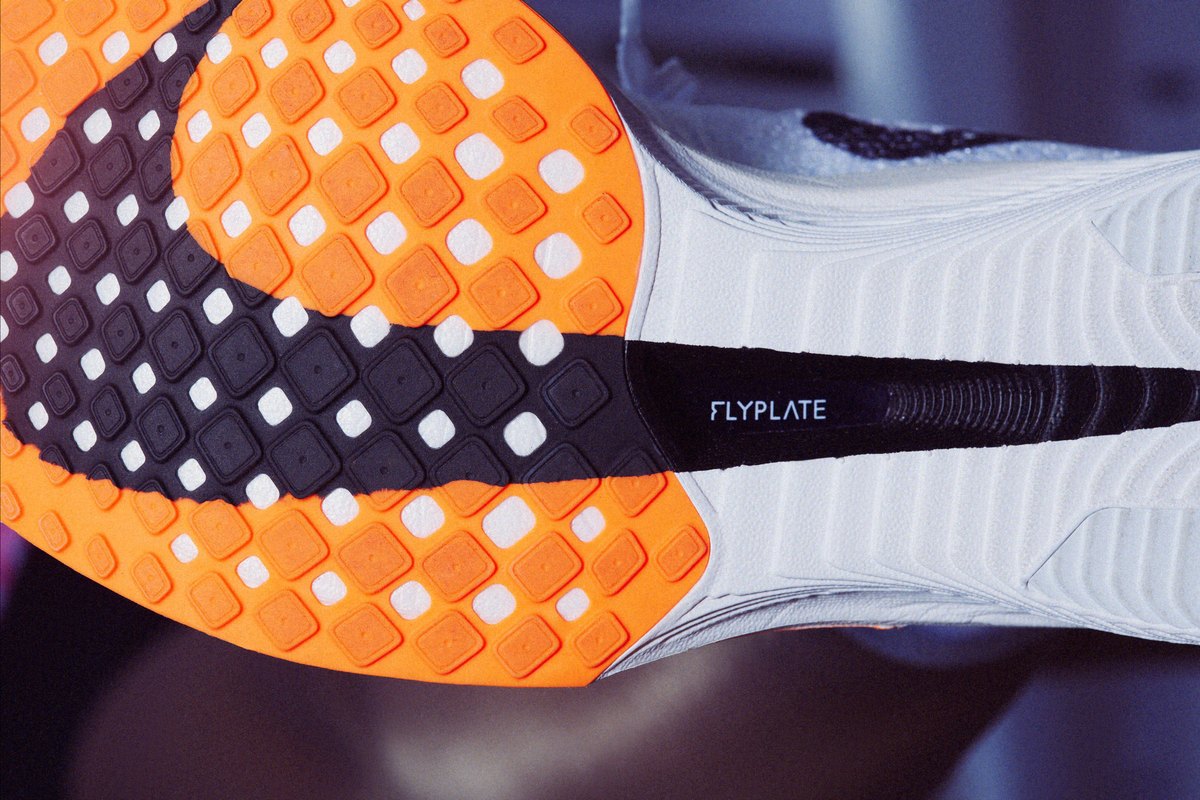
No single part of a running shoe has caused more argument in the last decade than a sheet of carbon fibre a couple of millimetres thick. It has been called cheating, been written into the rulebook, and been copied by every brand that makes a racing shoe. This is where it came from, what it actually does, and what it is worth to someone who is not trying to run a marathon in two hours.
1. Monza, May 2017: the plate goes public
On 6 May 2017, on the Formula One circuit at Monza, Eliud Kipchoge ran 26.2 miles in 2:00:25. It did not count – the pacing and the drinks were outside the rules – but it was almost three minutes quicker than the official world record of the time, Dennis Kimetto’s 2:02:57 from Berlin in 2014. Nike called the event Breaking2, and on Kipchoge’s feet was a shoe nobody outside the company had seen: the Zoom Vaporfly Elite, with a tall, soft midsole and a full-length carbon-fibre plate running through it.
The retail version arrived that summer as the Vaporfly 4%. The number was the claim, and it came with a study to back it – which is unusual enough in this industry to be worth a section of its own.
2. What the plate actually does
Start with what it does not do. A carbon plate is not a spring. It stores almost no energy and gives almost none back. What it does is change where your own energy goes.
Every stride, the toe joint bends, and bending it costs something. A stiff plate resists that bend, so less of the push-off is spent folding the foot and more of it goes into moving you forward. On its own that would be a small, uncomfortable gain – stiff shoes existed before 2017 and nobody raced in them. The trick was pairing the plate with a very thick, very light, very bouncy foam (Nike’s ZoomX, a PEBA-based material). The foam gives back a large share of the energy you put into it; the plate keeps that tall stack stable and turns it into a lever. Neither half works properly without the other. What each half does, what the 4% figure actually covers and whether a plate suits you is set out on the carbon plate running shoes page.
The 4% came from a study at the University of Colorado, published in Sports Medicine in 2018: eighteen good runners, three speeds, and oxygen consumption measured in the prototype and in two established racing shoes. The prototype lowered the energy cost of running by 4% on average. Two things about that figure are usually left out. It is an average – individual runners ranged well either side of it. And it belongs to the whole shoe, foam included; later work that changed the plate’s stiffness while keeping the rest found the plate on its own moved the needle very little.
3. Vienna, and the rule that followed
On 12 October 2019, in Vienna, Kipchoge ran 1:59:40 – again outside the rules for a record, again in a shoe nobody could buy: a prototype of what became the Alphafly, with a thicker stack still and air pods under the forefoot. By then the argument had a name, “technological doping”, and a body that had to answer it.
World Athletics did so on 31 January 2020. The amended rule said a road-racing shoe may have a sole no thicker than 40 mm, and no more than one rigid embedded plate. From 30 April 2020 it added the clause that mattered most to the elite field: a shoe had to have been on open sale to anyone for four months before it could be raced in. No more prototypes on the start line. The 40 mm ceiling is why every racing shoe since has been built to exactly it; the 2022 regulations went on to trim track spikes to 20 mm from November 2024 and to ban anything with sensing electronics inside, but the road limit stands.
The rule did not ban the plate. It drew a box around it. Which, for the brands, was the green light.
4. Everybody gets a plate
Within two years of the rule, every major brand had a plated racer built to the 40 mm limit: Saucony’s Endorphin Pro, adidas’s Adizero Adios Pro, ASICS’s Metaspeed, New Balance’s FuelCell RC Elite, Brooks’s Hyperion Elite, Puma’s Deviate Nitro Elite, Hoka’s Rocket X, On’s Cloudboom. The materials converged too: PEBA foams everywhere, a curved plate, a rockered shape that rolls you off the toe. Put them side by side and the differences are in the details – how the plate is shaped, whether the foam is one density or two, how much rubber is underneath.
Two of them are in the table on this site: the Saucony Endorphin Pro 4, which puts two different foams either side of its plate, and the Nike Vaporfly 3, the shoe the whole category is still measured against. Both are listed with the stack heights a lab measured rather than the ones on the box, because in both cases the two disagree.
5. What it means at four and a half hours
The honest answer is: less than the marketing implies, and more than nothing.
The 4% was measured at elite speeds, and the mechanism favours speed: the faster you run, the more the toe bends and the more the plate has to resist. The few studies that have looked at recreational paces still found a saving, but it was smaller and it varied a great deal between runners – some gained, some did not. If you run a marathon in four and a half hours, a plated shoe will probably make you a little more efficient. It will not make you a different runner.
There are costs the box does not mention. A plate that resists the foot bending loads the calf and the Achilles instead, and the years since 2017 have produced a steady trickle of injuries in exactly those places among runners who moved into plated shoes for everyday training. A tall, soft stack is unstable on cambers and uneven ground, and unkind to anyone who lands hard on the heel. The foams pack down within a few hundred miles, the uppers are built to weigh nothing rather than to last, and the price is roughly double that of a good daily trainer.
So the case for a plated shoe is narrow and real. For race day, and for the hard sessions that rehearse it, the small saving is worth having and the stiffness is tolerable. For the easy miles that make up most of anyone’s running, a plain, well-cushioned trainer will do the job better, last longer and hurt less.
What is left of it
The carbon plate is the rare technology in this industry that arrived with a number, a study and a rulebook. The number was true and is smaller than it sounds; the study was honest about that; the rule made a box everyone now builds to. What it did not come with is any evidence that it belongs on your feet on a Tuesday. It is a racing tool. Treat it as one.
Questions I get asked about carbon plates
Will a plate make me faster?
Probably a little, and less than the number suggests. The 4% was measured on good runners at elite speeds and it was an average – individuals ranged well either side of it. The mechanism favours speed, because the faster you run the more the toe bends and the more there is for the plate to resist. At four and a half hours you are likely to be slightly more efficient. You will not be a different runner.
Can I train in them every day?
I would not. A plate that stops the foot bending puts the load somewhere else, and since 2017 that has shown up as calf and Achilles trouble among people who moved into plated shoes for everyday miles. The foams pack down within a few hundred miles, the uppers are built to weigh nothing rather than to last, and the price is roughly double a good daily trainer. It is a racing tool.
Why is every racing shoe exactly 40 mm thick?
Because that is where the rule stops them. World Athletics capped road-racing soles at 40 mm on 31 January 2020, along with a limit of one rigid plate, and from 30 April 2020 required a shoe to have been on open sale for four months before anyone could race in it. Every brand now builds to the ceiling, which is why the stack heights all look the same.