

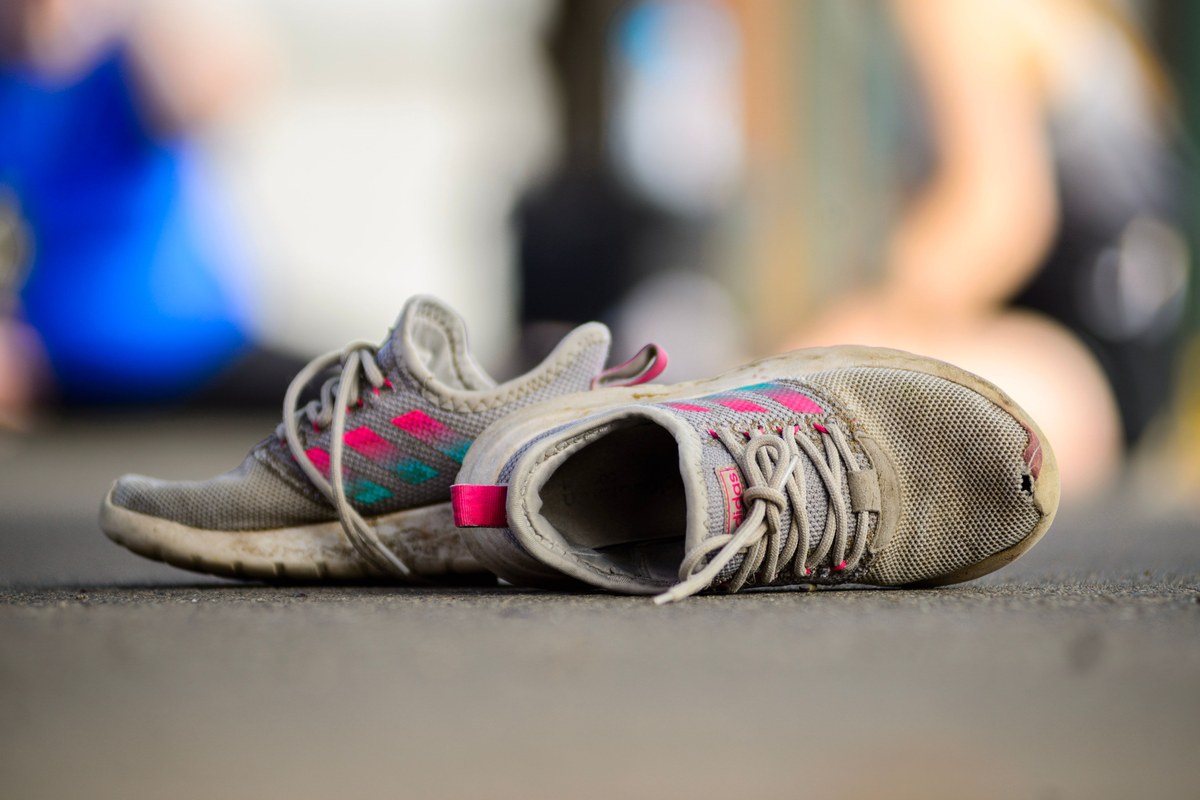
Ask when to replace a running shoe and you will be told between 300 and 500 miles, usually by somebody who sells running shoes. The figure is repeated so widely that it has the shape of a fact. It is not one. The research that exists is thin, it does not say what the rule says, and the one thing it agrees on is awkward: by the time a shoe is worn out, you probably cannot feel it.
Where the number came from
Nobody can point to the study behind 300 to 500 miles, because there is not one. It is trade lore – a range wide enough to be unfalsifiable, attached to a product with a replacement cycle, passed between retailers and magazines until it acquired the authority of repetition. Running coaches who have gone looking for its source say the same thing: the evidence underneath it is not there.
That does not make it useless. Most people, running most weeks, in most shoes, will want a new pair somewhere in that window. It makes it a rule of thumb being sold as a measurement.
What the studies actually found
The published work on cushioning loss is small: a handful of studies, typically around fifteen runners each, several of them on foams that are no longer made. Where they agree is on the shape of the curve rather than the number at the end of it. The loss is front-loaded. A new shoe gives up a meaningful part of its cushioning early – in the first hundred-odd miles – and then declines slowly over the rest of its life.
The finding that should bother you more is about perception. In the tests where runners were asked, they could not reliably tell. Cushioning had measurably dropped and the people running on it did not report a difference. Which means the common advice – replace them when they feel flat – is advice to use an instrument that does not work.
The expensive shoe is not the long-lasting one
The most useful recent piece of evidence is a study by Rodrigo-Carranza and colleagues in the Scandinavian Journal of Medicine & Science in Sports. Twenty-two male runners ran four-minute trials at 13 km/h in fresh and in 450 km-worn shoes, in two versions: one with a PEBA midsole, the modern super foam, and one with ordinary EVA.
New, the PEBA shoe was the more economical to run in, by around two per cent. After 450 km, that advantage was gone: the worn PEBA shoe cost significantly more energy than it had when new, while the worn EVA shoe had not measurably changed. The two ended up level.
One study, one foam, one brand – it is a datapoint, not a law, and the authors used shoes made by On, which did not fund the work. But it points the opposite way to the way people spend. The light, bouncy foam that costs the most is the one with the shortest useful life, and the shoe you are tempted to keep for best is the one that is quietly expiring while you keep it.
What to look at instead
Start with the part that cannot lie about itself. The outsole wears in a pattern, and when the rubber is through to the foam at the outer heel or under the ball of the foot, the shoe is finished regardless of mileage – you are now running on the midsole.
Then look at the midsole from the side, in good light. Compression shows up as fine horizontal creases, and more of them on one side than the other tells you how you land. A shoe that is collapsed on one side will tip you, and that is the state in which old shoes actually cause trouble.
Then the heel counter and the upper. If the heel has softened to the point where it no longer holds, or the upper has stretched where you lace it, the shoe has stopped doing its other job – holding the foot still – and no amount of foam underneath makes up for it.
And then the only bodily signal worth anything, which is not how the shoe feels but what the next day feels like. A familiar route that starts leaving you with a new, dull ache is better evidence than any number in a log.
What I do
I keep two pairs on the go and alternate them, which is the one habit with a plausible mechanism behind it: foam recovers some of its height between runs, and a pair that gets forty-eight hours rather than twelve is being asked for less. It also doubles the time before both pairs reach the same state at once, which is how people end up running a month longer than they meant to on shoes they know are dead.
And I write the date on the inside of the tongue in biro when I take them out of the box. Not the mileage – the date. It takes two seconds, it is still legible a year later, and it answers the question that actually comes up, which is not how far these have gone but how long I have been running in them.
Questions I get asked about worn-out shoes
Should I replace my shoes at 500 miles?
Not because of the number. If the outsole is worn through to the foam, if the midsole is visibly creased or collapsed on one side, or if a familiar run has started leaving you sore in a new place, replace them at 200 miles. If none of that is true at 600, carry on. The range is a retailer’s rule of thumb, not a measurement of your shoe.
Does rotating two pairs make them last longer?
Probably, and it is the most sensible habit available. Foam recovers some of its height between runs, so a pair given two days rather than twelve hours is doing less work per mile. It also stops both pairs wearing out at the same moment, which is how people end up running on two dead pairs at once.
Can I tell by looking at the tread?
The tread tells you when the shoe is definitely finished, not when it is still fine. Rubber worn through to the foam is a clear verdict. But the midsole can lose a good part of its cushioning while the outsole still looks almost new – and in the published tests, runners could not feel that loss. Look at the side of the midsole for creasing as well as at the bottom.