

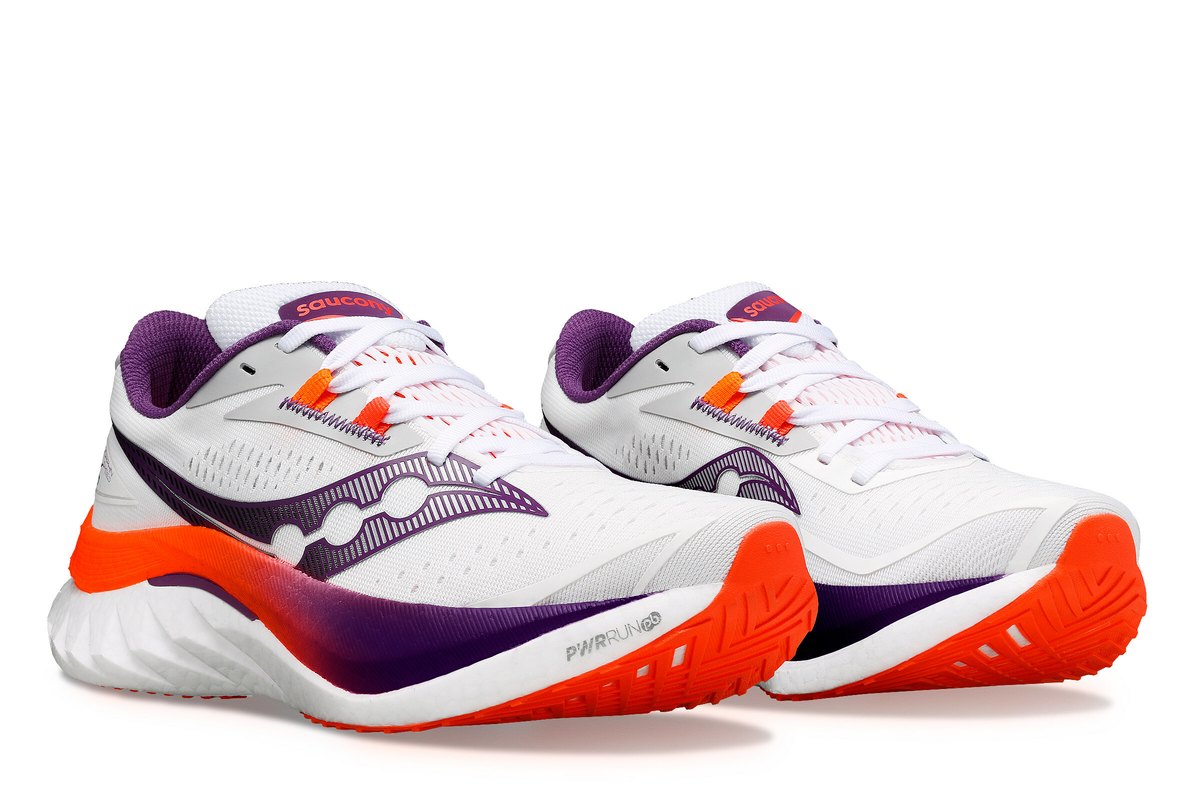
Saucony is the oldest running brand in the table, older than Nike by sixty-six years, and for most of its life almost nobody outside America could pronounce it. It is named after a creek, it once made boots for the Apollo programme by way of a parent company, and it now belongs to a Michigan firm that also owns Merrell. Sock-a-knee, for the record.
1898: four men and a creek
In 1898 four businessmen in Kutztown, Pennsylvania, founded the Saucony Shoe Company on the banks of the Saucony Creek, which gave it the name. The creek is on the logo still: the curving line with three dots is the river and three boulders in it. For its first seventy years Saucony made shoes for children and for everyday wear, in the small-town Pennsylvania manner, and had no particular ambition to be anything else.
1968: Hyde Athletic and the astronauts
Ambition arrived from outside. Hyde Athletic Industries, of Massachusetts, had built a business in specialist footwear – it held US government contracts for military boots and made the boots worn by the first Apollo astronauts on the Moon – and in 1968 it bought Saucony. Hyde moved the company into athletic shoes and, as the American running boom gathered in the 1970s, into running specifically. Through the 1980s and 1990s Saucony built a quiet reputation among runners who cared more about fit than fashion, and very little reputation with anyone else.
2010: the Kinvara, and being noticed
The shoe that changed that was the Kinvara, released in 2010: light, low, with a small drop from heel to toe at the height of the “natural running” argument. It was the right shoe at the right moment and it made Saucony fashionable among the people who write about running shoes, which in this industry is most of what fashionable means. The brand had been bought by Stride Rite in 2005; in 2012 the whole group passed to Wolverine World Wide, the Michigan company that owns Merrell and Sperry and, for a time, owned Brooks. Saucony is now run from Waltham, Massachusetts, as one of Wolverine’s brands.
2020: the plate, done differently
When carbon plates arrived, Saucony’s answer was unusual enough to be worth its own place in the story. The Endorphin Pro, released on 1 June 2020, put a full-length plate inside PWRRUN PB, a PEBA-based foam, and shaped the whole sole into a rocker the company called Speedroll. The fourth version, which is in the table on this site, went further and set the plate between two different foams – one above, one below – which is why it behaves more forgivingly at slower speeds than most of its rivals. It is, of the plated racers, the one that makes most sense if you are not elite.
What Saucony has, after a hundred and twenty-eight years, is a reputation for fit and for not following the crowd unless the crowd is right. It arrived at the low-drop shoe early, at the plate on its own terms, and it has never made a shoe that shouted. In the UK it is a specialist shop’s brand: sold where people are measured, worn by people who run more than they talk about it. There are worse things to be named after than a creek.
Questions I get asked about Saucony
How is it pronounced?
Sock-a-knee. It is named after the Saucony Creek in Pennsylvania, where four businessmen founded the company in 1898, and the creek is still in the logo – the curving line with three dots is the river with three boulders in it.
Is the Endorphin Pro easier to run in than other plated shoes?
At slower speeds, yes, and that is not an accident. The fourth version sets the plate between two different foams rather than on top of one, which makes the shoe less fussy about exactly where and how fast you land. Of the plated racers it is the one I would point a four-hour marathon runner at. Every caveat that applies to the others still applies – see the carbon plate story.
Is Saucony connected to Brooks?
Through an owner, at one remove. Wolverine World Wide, the Michigan company that has owned Saucony since 2012, also owns Merrell and once owned Brooks – it bought it at a bankruptcy auction in 1981. Beyond that history the two are not related today.