

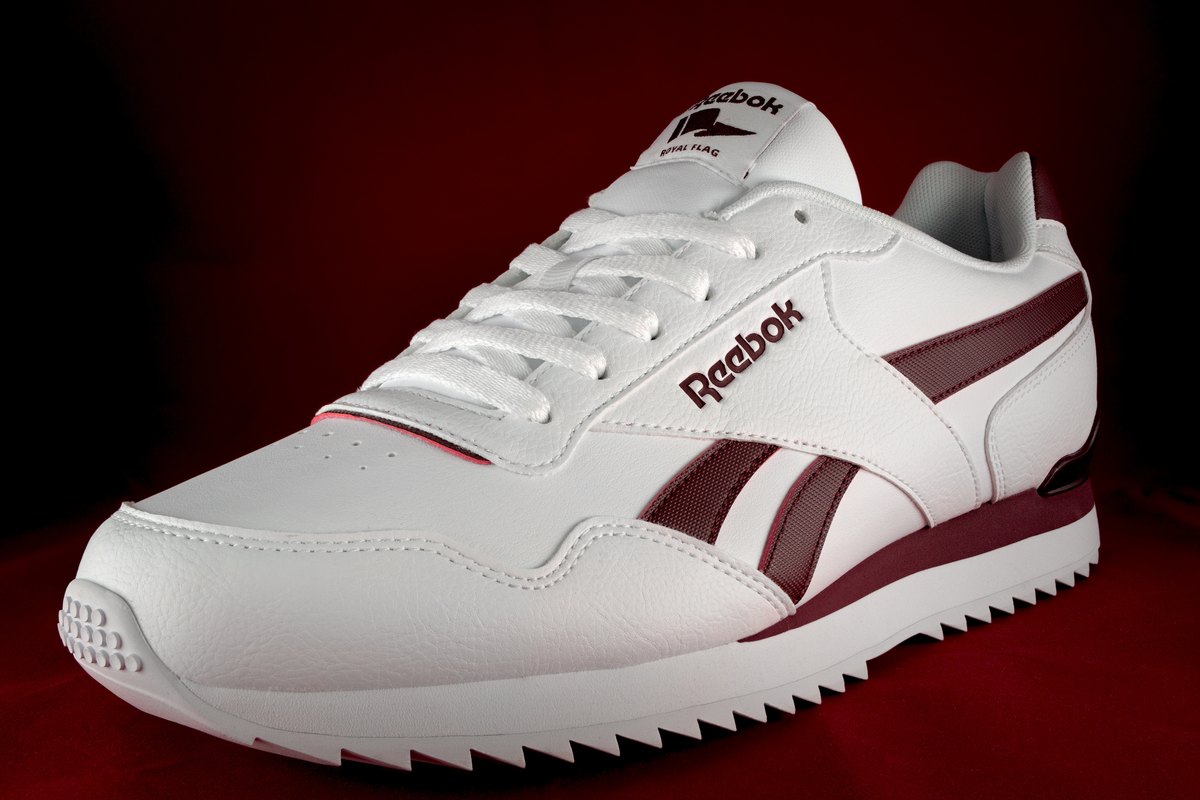
Reebok is the only brand in the table that is British, or was: it began with a fourteen-year-old in a bedroom above a sweet shop in Bolton, made the spikes that won Olympic golds, invented the women’s fitness shoe, sold itself to adidas for $3.8 billion and was sold on again for a third less. It is a story about how far a name can travel from the thing that made it.
1895: spikes above the sweet shop
Joseph William Foster was fourteen in 1895 when he started making running shoes in his bedroom above his father’s sweet shop in Bolton, Lancashire. His idea was the spiked sole – among the earliest anywhere – and by the time his sons joined him the company was J.W. Foster & Sons, supplier of running shoes to British athletes for half a century. By the company’s own account, Harold Abrahams and Eric Liddell – the two runners Chariots of Fire is about – won their golds at the 1924 Paris Olympics in Foster’s pumps. For a shoe company, it is difficult to have a better origin.
1958: two grandsons and a gazelle
In 1958, still in Bolton, two of the founder’s grandsons, Joe and Jeff Foster, set up a companion company and named it after a South African antelope they had found in a dictionary: the rhebok, spelt for English mouths. For twenty years Reebok was a small British maker of running shoes, respected and unprofitable. The turn came when an American distributor, Paul Fireman, bought the North American rights in 1979 and then, in 1984, the English parent company itself.
1982: the Freestyle, and a market nobody had seen
Fireman’s Reebok did something no sports company had done: it made a shoe for women who were not athletes. The Freestyle, released in 1982, was a soft leather shoe for aerobics classes at exactly the moment aerobics became a national craze. It sold in numbers running shoes had never reached, and in 1986 and 1987 Reebok, not Nike, was the largest sports shoe company in the United States – a position it lost in 1988 and never regained. The Bolton spikes were a very long way behind.
The Pump, released on 24 November 1989, was the other icon – a basketball shoe with an inflatable bladder in the tongue, pumped up by pressing a button shaped like a ball. It was expensive, it was slightly absurd, and every child wanted one. It was also the last time Reebok defined a category rather than following one.
2006 to 2022: bought, and sold
adidas bought Reebok in 2006 for $3.8 billion, mainly to gain ground on Nike in North America. The fit was never good; the brand was repositioned around fitness and CrossFit, then around fashion, and its share of the market fell through most of the sixteen years that followed. In August 2021 adidas agreed to sell it to Authentic Brands Group, a company that owns names and licenses them out rather than making things, for up to $2.5 billion; the sale closed on 1 March 2022. Reebok today is a brand run from Boston and licensed to manufacturers, not a shoemaker with its own factories.
There is still a running story in it. The Floatride foam, which appears in the table under NITRO / Floatride, was a genuinely light, responsive material when it launched, and an OrthoLite insole is standard across the range. But the honest summary is that Reebok’s best running shoes were made in Bolton a century ago, and the name has since been about other things. It is a fine name. It has just travelled further from a bedroom above a sweet shop than any name should be asked to.
Questions I get asked about Reebok
Does Reebok still make shoes?
Not in the sense you mean. Since the sale closed on 1 March 2022 it has been a brand run from Boston and licensed to manufacturers – Authentic Brands Group owns names and lets other people make the things. There are still Reebok shoes. There is no longer a Reebok shoemaker.
Is there anything British left about it?
The name and the origin, and not much else. Joseph William Foster started in a bedroom above a sweet shop in Bolton in 1895, and two of his grandsons named the company after an antelope they found in a dictionary in 1958. It has been American-owned since Paul Fireman bought the English parent company in 1984.
Is Floatride worth looking at?
It was a genuinely light and responsive foam when it launched, and an OrthoLite insole comes as standard across the range, which is more than some competitors manage. The honest summary is that the running line is decent and is no longer what the brand is about.